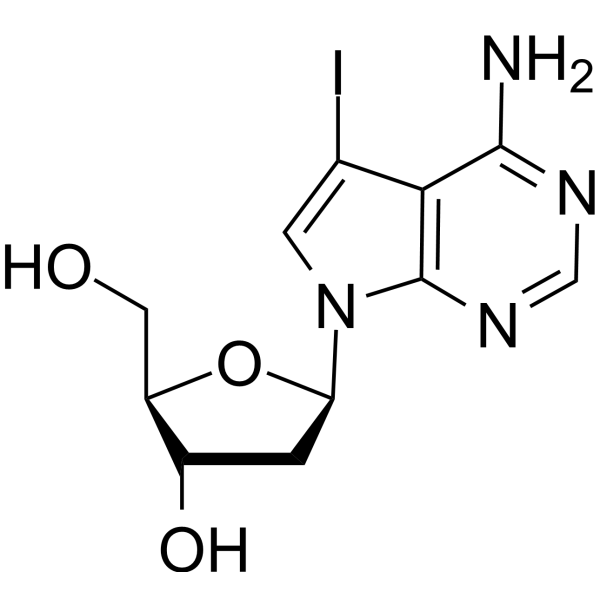
DNA/RNA Synthesis
RNA synthesis, which is also called DNA transcription, is a highly selective process. Transcription by RNA polymerase II extends beyond RNA synthesis, towards a more active role in mRNA maturation, surveillance and export to the cytoplasm.
Single-strand breaks are repaired by DNA ligase using the complementary strand of the double helix as a template, with DNA ligase creating the final phosphodiester bond to fully repair the DNA.DNA ligases discriminate against substrates containing RNA strands or mismatched base pairs at positions near the ends of the nickedDNA. Bleomycin (BLM) exerts its genotoxicity by generating free radicals, whichattack C-4′ in the deoxyribose backbone of DNA, leading to opening of the ribose ring and strand breakage; it is an S-independentradiomimetic agent that causes double-strand breaks in DNA.
First strand cDNA is synthesized using random hexamer primers and M-MuLV Reverse Transcriptase (RNase H). Second strand cDNA synthesis is subsequently performed using DNA Polymerase I and RNase H. The remaining overhangs are converted into blunt ends using exonuclease/polymerase activity. After adenylation of the 3′ ends of DNA fragments, NEBNext Adaptor with hairpin loop structure is ligated to prepare the samples for hybridization. Cell cycle and DNA replication are the top two pathways regulated by BET bromodomain inhibition. Cycloheximide blocks the translation of mRNA to protein.
DNA/RNA Synthesis Isoform Specific Products
All Product Categories
-
DNA/RNA Synthesis Inhibitors
(1439)
View all products
-
DNA/RNA Synthesis Agonists
(10)
View all products
-
DNA/RNA Synthesis Antagonists
(2)
View all products
-
DNA/RNA Synthesis Activators
(42)
View all products
-
DNA/RNA Synthesis Modulators
(33)
View all products
-
DNA/RNA Synthesis Chemicals
(20)
View all products
-
DNA/RNA Synthesis Inducers
(15)
View all products
-
DNA/RNA Synthesis Degraders
(3)
View all products
-
DNA/RNA Synthesis Controls
(5)
View all products
-
DNA/RNA Synthesis Substrates
(6)
View all products
-
DNA/RNA Synthesis Ligands
(5)
View all products
-
DNA/RNA Synthesis Related Products (2832)
Related Products (2832)

-
Antibodies (248)
-
DNA/RNA Synthesis Isoform Comparison
-
3'-Deoxy-3'-fluorothymidine-d3
 0 ImagesCat. No.: HY-W740364CAS No.: 1346523-18-93'-Deoxy-3'-fluorothymidine-d3 is the deuterium labeled Alovudine (HY-B1516). Alovudine (3'-Fluoro-3'-deoxythymidine) is a mtDNA synthesis inhibitor and a marker of DNA synthesis. Alovudine is less susceptible to inflammatory changes than 18F-Fluorodeoxyglucose (FDG) and thus is a better biomarker in pancreatic cancer. Alovudine shows anti-orthopoxvirus and anti-leukemic activity.
-
5'-O-DMT-N2-DMF-dG
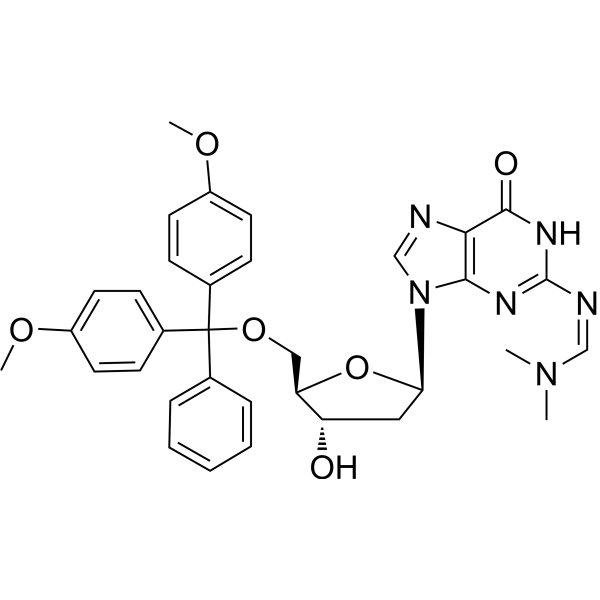 0 Images5'-O-DMT-2'-O-TBDMS-rI is a modified nucleoside. 5'-O-DMT-2'-O-TBDMS-rI can be used in the synthesis of deoxyribonucleic acid or nucleic acid.
-
Pseudouridine 5'-triphosphate
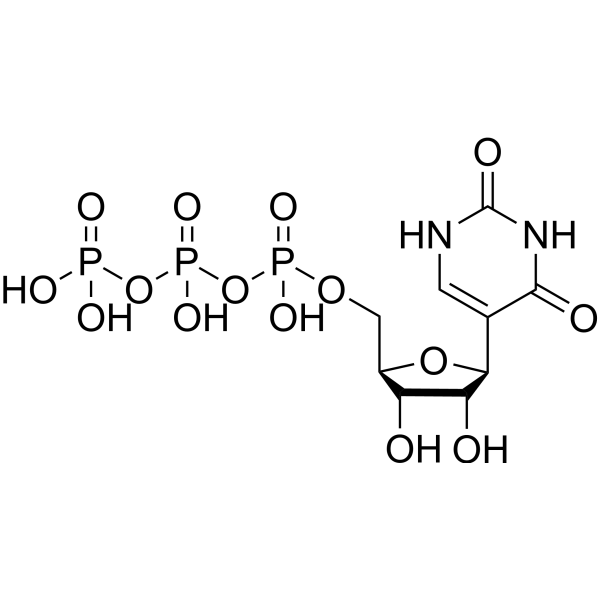 0 ImagesPseudouridine 5'-triphosphate (Pseudo-UTP) is a modified ribonucleoside triphosphate and uracil base-modified UTP derivative. Pseudouridine 5'-triphosphate enhances translational properties and stability of mRNA, reduces innate immune responses in mammalian cells, and inhibits signal-dependent transcription termination of vaccinia virus early gene transcription while supporting transcription elongation. Pseudouridine 5'-triphosphate can be used for the research of vaccinia virus infection.
-
2'-Deoxyadenosine-5'-triphosphate-d14 (dilithium)
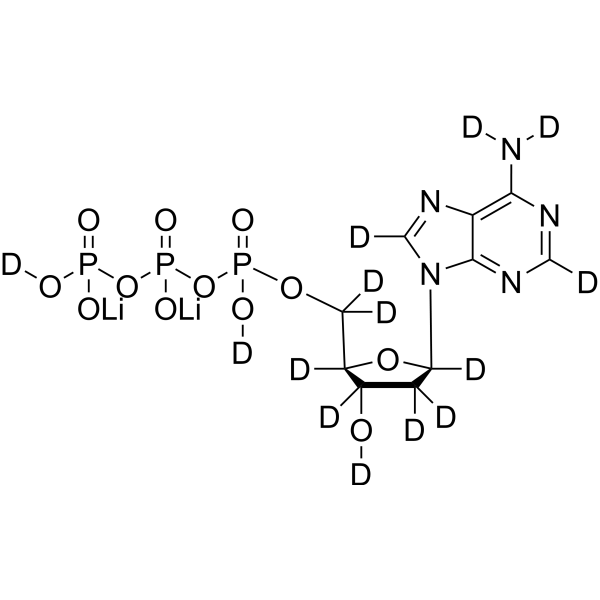 0 ImagesCat. No.: HY-136648S3CAS No.: 2687960-68-3Synonyms: dATP-d14 dilithium2'-Deoxyadenosine-5'-triphosphate-d14 (dATP-d14) dilithium is deuterium labeled 2'-Deoxyadenosine-5'-triphosphate (HY-136648). 2'-Deoxyadenosine-5'-triphosphate (dATP) is a nucleotide used in cells for DNA synthesis (or replication), as a substrate of DNA polymerase.
-
Hydroxyurea-15N
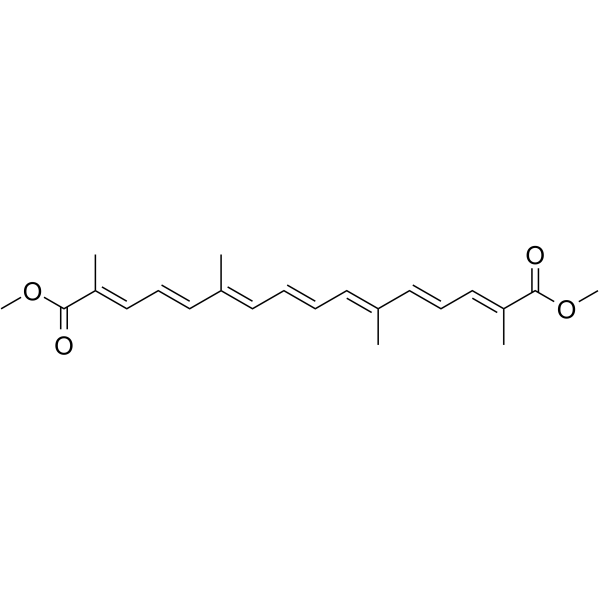
 0 ImagesCat. No.: HY-W698472CAS No.: 214331-53-0Synonyms: Hydroxycarbamide-15NHydroxyurea-15N (Hydroxycarbamide-15N) is the 15N labeled Hydroxyurea (HY-B0313). Hydroxyurea is a cell apoptosis inducer that inhibit DNA synthesis through inhibition of ribonucleotide reductase. Hydroxyurea shows anti-orthopoxvirus activity.
-
C791-0064
 0 ImagesC791-0064 is a RAD52 inhibitor. C791-0064 specifically binds to RAD52 and disrupts its single-strand annealing activity. C791-0064 specifically inhibits the proliferation of cancer cells with BRCA2 deficiency, inducing DNA damage and apoptosis (apoptosis). C791-0064 can be used for the study of BRCA mutation-related cancers (such as breast cancer and ovarian cancer).
-
Amidox
 0 ImagesCat. No.: HY-107153CAS No.: 95933-72-5Amidox is a ribonucleotide reductase inhibitor. Amidox potentiates the action of Arabinofuranosylcytosine in leukemia.
-
Thymidine-13C
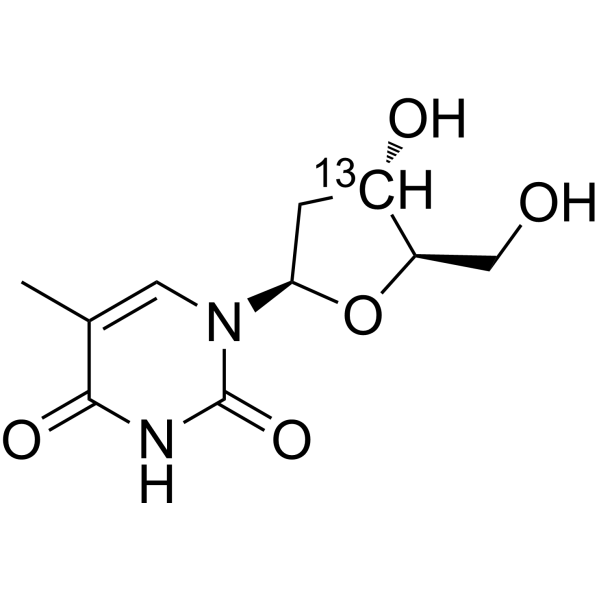 0 ImagesSynonyms: DThyd-13C; NSC 21548-13CThymidine-13C is the 13C labeled Thymidine. Thymidine, a specific precursor of deoxyribonucleic acid, is used as a cell synchronizing agent. Thymidine is a DNA synthesis inhibitor that can arrest cell at G1/S boundary, prior to DNA replication
-
Exonuclease III
 0 ImagesExonuclease III is a nuclease for specifically targeting double-stranded DNA (dsDNA). Exonuclease III is a DNA repair-associated nuclease with apurinic/apyrimidinic (AP)-endonuclease and 3'→5' exonuclease activities. Exonuclease III cleaves the ssDNA at 5'-bond of phosphodiester from 3' to 5' end by both exonuclease and endonuclease activities.
-
wrwycr-NH2 TFA
 0 ImagesCat. No.: HY-P10930Awrwycr-NH2 (TFA) is a peptide. wrwycr-NH2 (TFA) is cytotoxic to multiple cancer cells, can induce DNA damage and cell cycle arrest, but does not induce endoplasmic reticulum stress. wrwycr-NH2 (TFA) has anti-tumor activity, and it shows better efficacy when used in combination with DNA-damaging agents.
-
Levofloxacin hydrochloride (Standard)
 0 ImagesSynonyms: (-)-Ofloxacin hydrochloride (Standard)Levofloxacin (hydrochloride) (Standard) is the analytical standard of Levofloxacin hydrochloride (HY-B0330B). This product is intended for research and analytical applications. Levofloxacin hydrochloride is an orally active antibiotic. Levofloxacin inhibits DNA gyrase and topoisomerase IV activity, inducing Apoptosis. Levofloxacin hydrochloride has antibacterial activity against both Gram-positive and Gram-negative bacteria. Levofloxacin hydrochloride exhibits anticancer activity against lung cancer. Levofloxacin hydrochloride has anti-acnegenic, anxiogenic, and analgesic effects. Levofloxacin hydrochloride shortens sleep duration in mice. Levofloxacin hydrochloride can be used in the research of infectious diseases (such as tuberculosis, chronic periodontitis, bacterial infections associated with stable COPD, and BK viremia) and lung cancer.
-
Neoxanthin
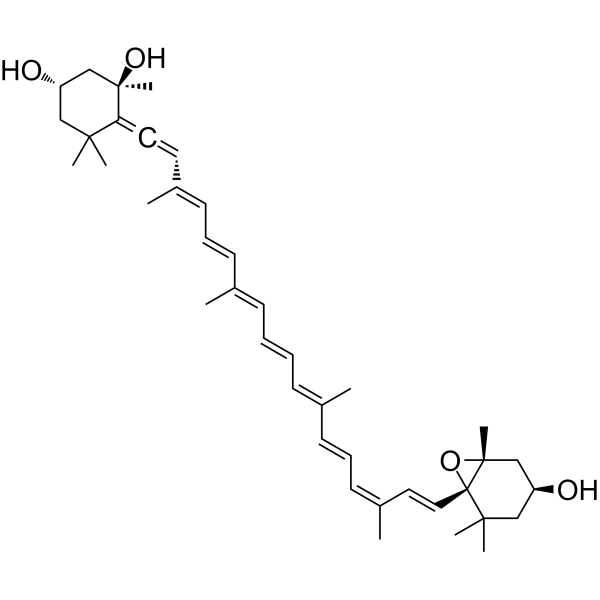 0 ImagesCat. No.: HY-N7523CAS No.: 14660-91-4Neoxanthin is a major xanthophyll carotenoid and a precursor of the plant hormone abscisic acid in dark green leafy vegetables. Neoxanthin is a potent antioxidant and light-harvesting pigment. Neoxanthin induces apoptosis and has anticancer actions.
-
Cycloguanil
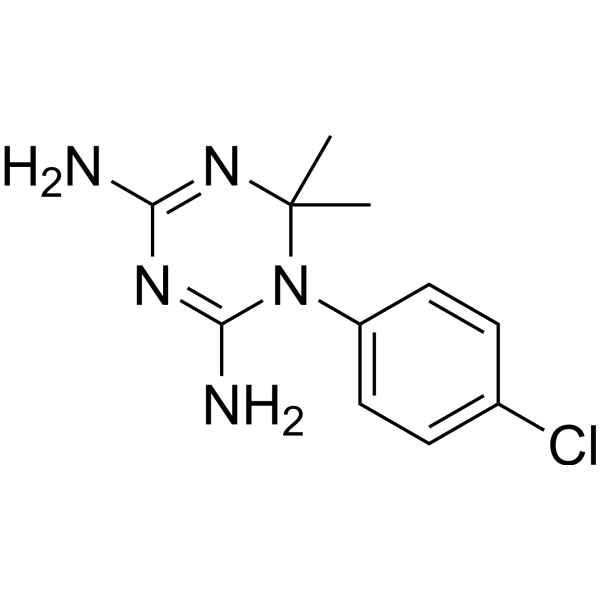 0 ImagesCycloguanil (Chlorguanide triazine) is a dihydrofolate reductase (DHFR) inhibitor with an IC50 of 10.8 μM against human DHFR. Cycloguanil blocks the folate metabolic pathway, thereby affecting nucleotide synthesis and interfering with DNA replication. Cycloguanil inhibits DHFR in Plasmodium and is thus used in malaria research. Cycloguanil also potently inhibits DHFR in human cancer cells and blocks the transcriptional activity of STAT3, thereby exhibiting anticancer activity.
-
Cytidine-5'-triphosphate disodium hydrate
 0 ImagesCat. No.: HY-125818CCAS No.: 652154-13-7Synonyms: Cytidine triphosphate disodium hydrate; 5'-CTP disodium hydrateCytidine 5′-triphosphate is a nucleoside triphosphate and serves as a building block for nucleotides and nucleic acids, lipid biosynthesis. Cytidine triphosphate synthase can catalyze the formation of cytidine 5′-triphosphate from uridine 5′-triphosphate (UTP). Cytidine 5′-triphosphate is an essential biomolecule in the de novo pyrimidine biosynthetic pathway in T. gondii.
-
F1-RIBOTAC
 0 ImagesCat. No.: HY-171148CAS No.: 3019907-96-8F1-RIBOTAC is a ribonuclease-targeting chimeras (RIBOTACs). F1-RIBOTAC decreases QSOX1-a mRNA expression level in an RNase L-dependent manner. F1-RIBOTAC can be used for the research of cancer. (Pink: RNA ligand (HY-168460); Black: linker (HY-W008005); Blue: RNase L ligand (HY-168452))
-
Lurbinectedin-d3
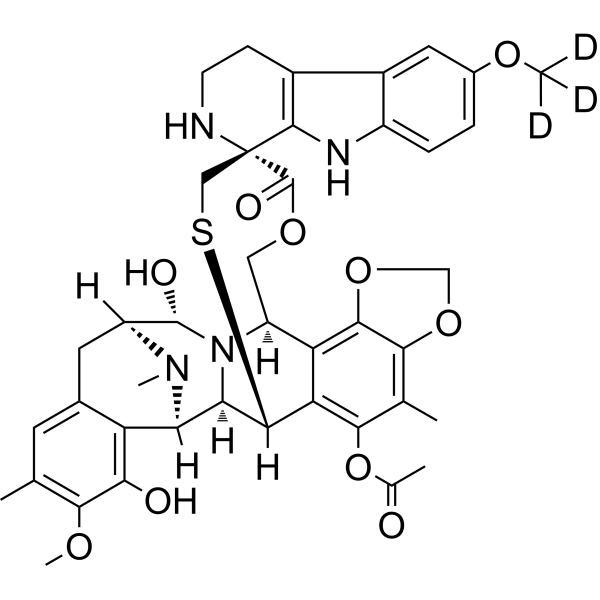 0 ImagesCat. No.: HY-16293SPurity: 98.71%Synonyms: PM01183-d3; LY-01017-d3Lurbinectedin-d3 is deuterium labeled Lurbinectedin. Lurbinectedin (PM01183) is a DNA minor groove covalent binder with potent anti-tumour activity; inhibits RMG1 and RMG2 cell growth with IC50 values of 1.25 and 1.16 nM, respectively.
-
Mequindox
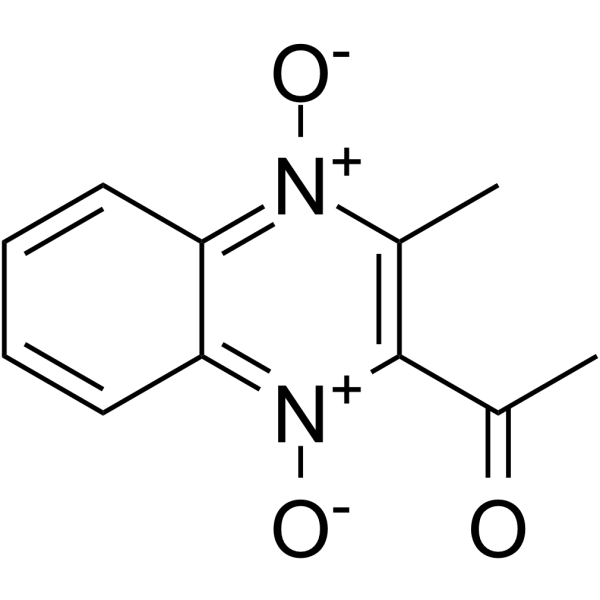 0 ImagesMequindox is an antimicrobial agent. Mequindox acts as an inhibitor of DNA synthesis. Mequindox induces genotoxicity and carcinogenicity in mice.
-
Uridine triphosphate-d13 dilithium
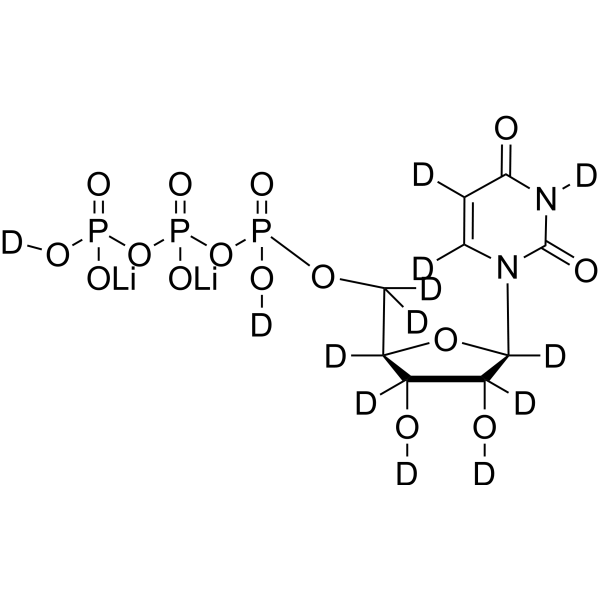 0 ImagesCat. No.: HY-107372S3Purity: 99.6%Synonyms: UTP-d13 dilithium; Uridine 5'-triphosphate-d13 dilithiumUridine triphosphate-d13 (UTP-d13 dilithium; Uridine 5'-triphosphate-d13) dilithium is deuterium labeled Uridine triphosphate (HY-107372). Uridine triphosphate (UTP;Uridine 5'-triphosphate) is a nucleotide that regulates the functions of the pancreas in endocrine and exocrine secretion, proliferation, channels, transporters, and intracellular signaling under normal and disease states.